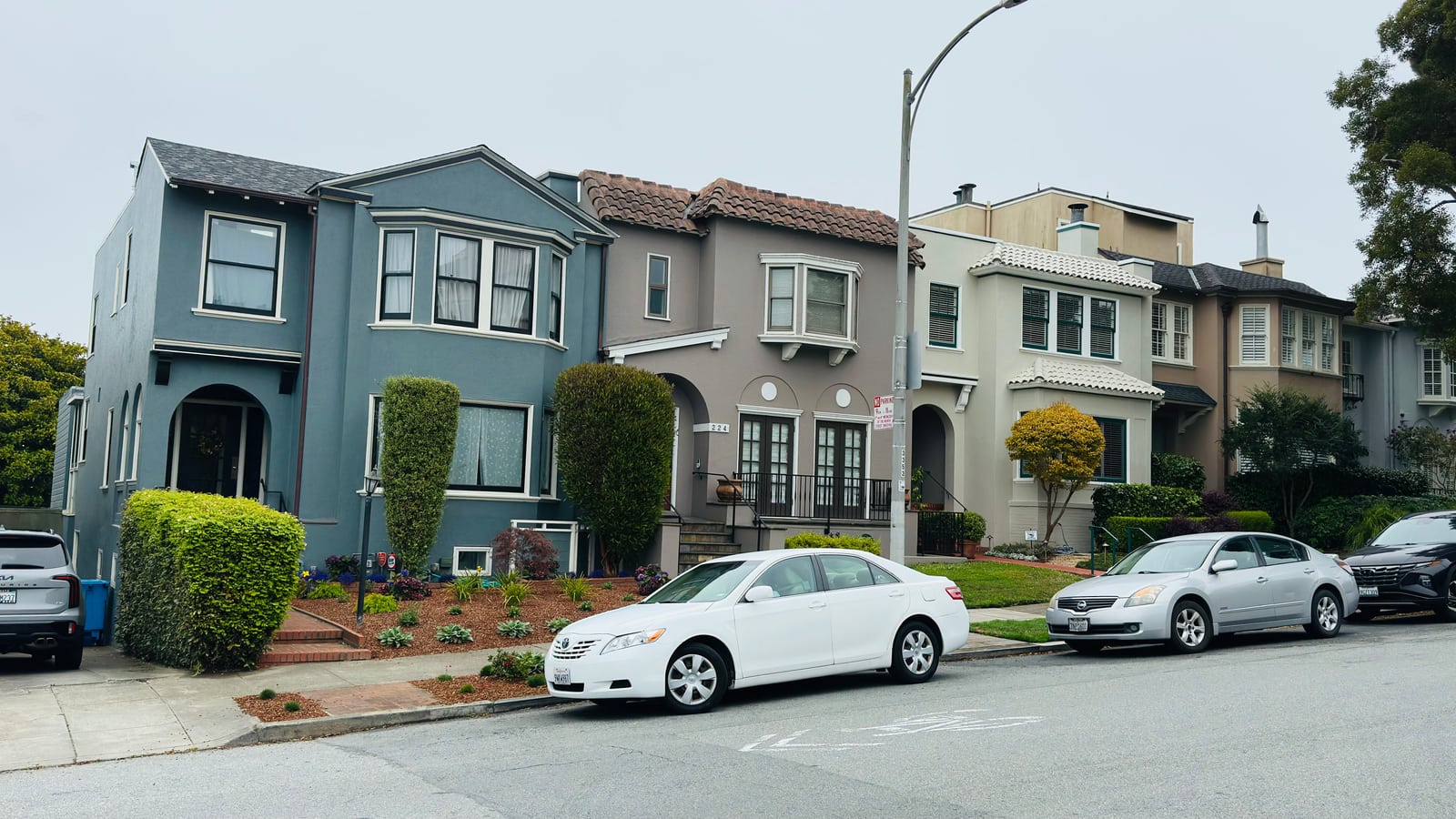
- Bay Area luxury homes (roughly $3.1M–$7.6M) are up about 13.4% since late 2022, while lower-end homes (~$535K–$615K) fell about 3.8% over the same period — one region, two very different markets.
- High-income AI, tech, and finance buyers still compete aggressively for exceptional homes; payment-sensitive buyers are far more selective with rates in the low-6% range.
- Well-priced homes move and overpriced homes stall — pricing discipline now matters more than generalized momentum.
- County-by-county variation makes micro-market strategy essential: SF, Marin, San Mateo, Santa Clara, Alameda, and Contra Costa are each moving at different speeds.
The Bay Area housing market in 2026 is no longer moving in one direction. It is behaving like two different markets at the same time, with luxury homes in core tech-driven locations showing clear resilience while many entry-level and lower-priced segments remain more rate-sensitive and selective. For buyers and sellers in San Francisco, Marin, Alameda, Contra Costa, San Mateo, and Santa Clara counties, that split is shaping pricing strategy, negotiation leverage, and the kind of opportunities available right now.
One of the clearest data points behind this shift came from a 2026 analysis showing Bay Area luxury homes, defined in that report as roughly $3.1 million to $7.6 million, up about 13.4 percent since late 2022, while lower-end homes in the roughly $535,000 to $615,000 range fell about 3.8 percent over the same period. That does not mean the lower end is collapsing or the luxury market is universally easy. It means buyer behavior has changed. High-income households tied to AI, tech, and finance still compete aggressively for exceptional homes, while more payment-sensitive buyers are far less willing to stretch when rates remain around the low-6 percent range.
In practical terms, this creates very different experiences depending on what and where someone is buying. In prime San Francisco neighborhoods, top Peninsula pockets, select Santa Clara County markets, and desirable parts of Marin, well-located single-family homes can still move quickly and attract multiple offers when they are priced correctly and presented well. At the same time, certain condos, fringe locations, and more price-sensitive suburban segments are taking longer to sell when pricing overshoots what the market will bear.
This is why broad headlines about the Bay Area being “hot” or “soft” often miss the point. A founder looking at Pacific Heights, a family comparing Marin and Burlingame, and a first-time buyer searching in parts of Contra Costa County are not shopping in the same market, even though all of them are technically in the same region.
Why the market split is happening
The first driver is income concentration. The Bay Area is still seeing outsized demand from high earners in AI, software, venture-backed startups, and adjacent executive roles, and that demand is concentrated in very specific neighborhoods and school districts. Buyers in those categories are often less constrained by monthly payment shock than households shopping at the lower end of the market, especially when they have liquidity from RSUs, bonuses, or prior home equity.
The second driver is mortgage rates. Forecasts and 2026 commentary place mortgage rates around 6.0 to 6.1 percent on average, with some variation by borrower profile and lender relationship. Even if that range is much better than the fear-driven spikes of the last few years, it is still dramatically above the 2 to 3 percent era that shaped many current homeowners’ expectations. That has a much bigger impact on the buyer stretching to buy a starter home than on the executive trading up into a premium property with substantial cash reserves.
The third driver is selectivity. In 2026, buyers are not chasing every listing. Mid-year Bay Area updates repeatedly describe a market where well-priced homes move and overpriced homes stall, which is a classic sign that pricing discipline matters more than generalized momentum. This is not a broad collapse. It is a market that is increasingly efficient in punishing weak presentation, poor location fit, and unrealistic seller expectations.
What this means by county
San Francisco still commands strong attention in premium single-family neighborhoods and select luxury condo inventory, particularly where walkability, architecture, and proximity to major job centers create durable demand. Marin continues to appeal to buyers prioritizing privacy, schools, outdoor access, and lifestyle, and its best properties remain tightly held.
San Mateo and Santa Clara counties continue to benefit from proximity to major campuses and executive employment centers, making them resilient in the premium tiers even as buyers become more selective on condition and value. Alameda and Contra Costa counties often offer more space and more price diversity, which means they can also show more visible soft spots in certain neighborhoods or product types when rates pressure affordability.
That county-by-county variation is exactly why broad pricing advice is risky in 2026. Sellers need a micro-market pricing strategy, not a headline. Buyers need neighborhood-level analysis, not a generic Bay Area forecast.
What buyers should do in a two-speed market
For buyers, the biggest mistake is assuming all Bay Area inventory deserves the same urgency. In the strongest submarkets, hesitation can still mean losing the house. In weaker or more rate-sensitive segments, patience and discipline may open the door to price reductions, credits, or improved terms.
For move-up and executive buyers, 2026 can be an unusually good time to compare regions with a clear eye. Paying a premium for the right SF or Peninsula address may make sense if location and lifestyle are the priority. But there may also be better value in select East Bay or Marin scenarios depending on space needs, family goals, and commute patterns.
For first-time and payment-sensitive buyers, the lesson is different. Not every listing should be chased, and not every over-asking comp should define value. In many lower-end and mixed segments, the smartest move is to focus on homes that have sat, sellers who missed the opening window, and areas where competition has cooled enough to create leverage.
Final takeaway
The Bay Area market in 2026 is not frozen and it is not universally overheated. It is split. Luxury and top-tier homes in the right locations are still proving hard to replace and hard to win, while entry-level and more commodity-like inventory can be far more negotiable than many buyers assume. That is exactly why buyers and sellers need strategy tailored to price band, county, and neighborhood instead of relying on one-size-fits-all market narratives.
15 Minutes. Clarity for Your Buy or Sell.
All conversations are strictly confidential • DRE #01804851
Frequently Asked Questions
Why is the Bay Area a "two-speed" market in 2026?
Luxury homes in core tech-driven locations are showing clear resilience — one 2026 analysis put homes in the roughly $3.1M–$7.6M range up about 13.4% since late 2022 — while lower-priced segments (roughly $535K–$615K) fell about 3.8% over the same period. High earners are less constrained by payment shock, while entry-level buyers remain rate-sensitive.
Which Bay Area segments are strongest in 2026?
Prime San Francisco neighborhoods, top Peninsula pockets, select Santa Clara County markets, and desirable parts of Marin. Well-located single-family homes in these areas can still move quickly and attract multiple offers when priced correctly and presented well.
What should payment-sensitive buyers do differently in 2026?
Not every listing deserves the same urgency. Focus on homes that have sat, sellers who missed the opening window, and areas where competition has cooled enough to create leverage on price, credits, or terms.

About the author
Adrian Huntington · San Francisco Luxury REALTOR® · DRE #01804851
Adrian Huntington has 20+ years of San Francisco real estate experience and $414M+ in closed sales, advising luxury buyers, sellers, and relocation clients with off-market access and RSU / equity-compensation strategy at Berkshire Hathaway HomeServices Drysdale Properties.
More about Adrian →