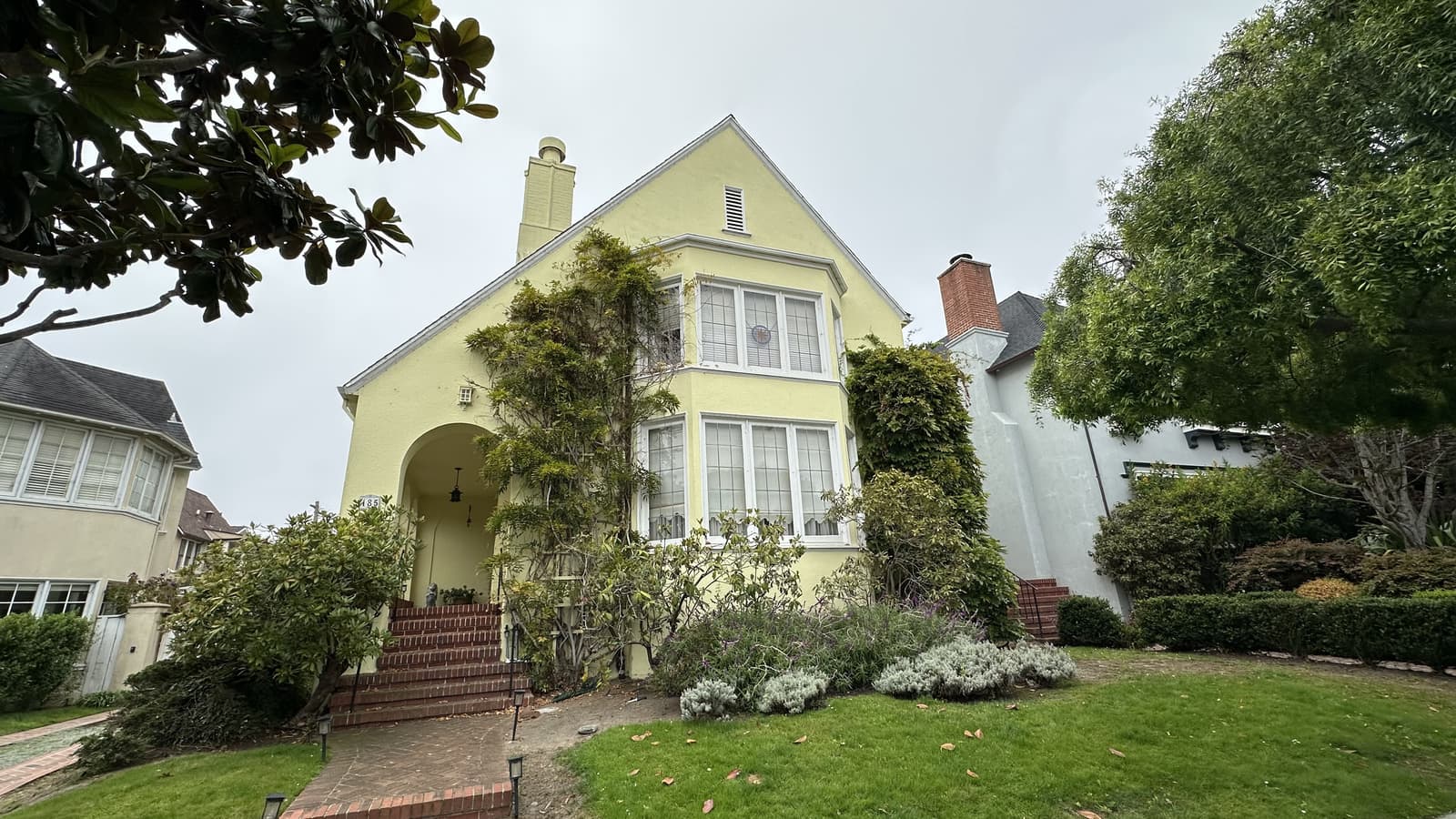
- About 77% of California homeowners had mortgage rates below 5% as of late 2025, while new 30-year rates average around 6.0–6.1% — the gap that keeps would-be sellers on the sidelines.
- Rate-lock hits the Bay Area hardest because high home prices amplify the payment impact of higher borrowing costs.
- Keeping a 3% mortgage on a home that no longer works can become an expensive form of indecision — analyze the real cost of staying vs. moving.
- Buy-first bridge financing, HELOC/ADU improvements, honest income math, and Prop 19 tax-base transfers are practical paths back to mobility.
One of the biggest reasons Bay Area inventory remains constrained in 2026 has nothing to do with demand and everything to do with psychology. Homeowners who locked in 2 to 4 percent mortgage rates during the pandemic era are reluctant to sell because replacing that payment with a new loan near 6 percent feels financially painful, even when the home no longer fits their life. That phenomenon is often called rate-lock, and it has become one of the defining forces shaping housing supply across California and the Bay Area.
California affordability data shows that, as of late 2025, about 77 percent of California homeowners had mortgage rates below 5 percent. By contrast, 2026 mortgage rate forecasts and commentary generally place new 30-year rates around 6.0 to 6.1 percent, with some forecasts suggesting a broader range from the high-5s to mid-6s depending on market conditions. For a Bay Area homeowner with a meaningful loan balance, that difference can translate into a dramatically higher monthly payment on the next home, even if the move is only a moderate upgrade.
This is why so many homeowners feel trapped. They may want more space, a shorter commute, better schools, or a simpler lifestyle. But selling means giving up a financing advantage that may never return.
Why rate-lock matters so much in the Bay Area
Rate-lock affects every housing market, but it hits the Bay Area especially hard because local home prices amplify the payment impact of higher borrowing costs. A one-million-dollar financing decision in a lower-cost market is not the same as a one-million-dollar financing decision in San Francisco, Marin, San Mateo, or Santa Clara County.
It also matters because many Bay Area homeowners are not truly “unwilling” to move. They are conflicted. Their current home may be too small, too large, too far from school or work, or simply not aligned with the next stage of life. But the payment reset creates enough discomfort that many owners postpone the move, sometimes for years.
That delay has a market-wide effect. Fewer owners list. Buyers compete more intensely for the homes that do come available. And the resulting scarcity helps keep desirable inventory tight even in a higher-rate environment.
The hidden cost of staying put
The emotional appeal of keeping a 3 percent mortgage is obvious, but it can obscure the cost of inaction. A family that stays in a layout that no longer works may be paying for that low rate with daily friction. A household that needs a better school district, more space for remote work, or a lower-maintenance property may be preserving a monthly payment while giving up quality of life.
In some cases, homeowners also delay smart financial moves because they frame the low-rate mortgage as something too valuable to replace under any circumstance. But money saved on a mortgage only matters if the home still supports the owner’s goals. When the home no longer works, keeping the old loan can become an expensive form of indecision.
Practical ways to move without panicking
In 2026, escaping rate-lock does not mean pretending the math does not matter. It means building a plan around it. Depending on income, equity, and timing, there are several strategies Bay Area sellers can use to regain mobility.
One option is a buy-first strategy using bridge financing or other transitional lending. For homeowners with strong income and substantial equity, this can make it possible to secure the next property before listing the current one, reducing the pressure to sell under an artificial deadline. Another option is using a HELOC or other equity-based financing to improve the current home, create an ADU, or solve a layout problem rather than moving immediately.
For some households, the answer is simply a more honest calculation. If income has increased meaningfully since the original purchase, the jump from 3 percent financing to something near 6 percent may be uncomfortable but manageable, especially if the move solves a major lifestyle problem. For older owners or qualified homeowners considering in-state moves, tax rules such as Prop 19 can also change the equation by allowing a transfer of the property tax base in eligible circumstances.
What this means for buyers and sellers right now
For sellers, the lesson is that rate-lock is real, but it should be analyzed rather than feared. The best decision is rarely found in a headline about rates. It comes from comparing the real cost of moving against the real cost of staying in the wrong home.
For buyers, rate-lock explains why inventory can still feel frustratingly thin in 2026 even when there is constant talk about market normalization. It also means that when a serious seller does come to market, that seller is often motivated by life change rather than fantasy pricing alone, which can create cleaner negotiations for well-prepared buyers.
Final takeaway
The Bay Area’s 3 percent mortgages have become a powerful anchor on housing supply, but they do not have to become a permanent trap for homeowners. The right strategy in 2026 is not to wait for yesterday’s rates to come back. It is to structure the next move intelligently so financing becomes one variable in the decision, not the only one.
15 Minutes. Clarity for Your Buy or Sell.
All conversations are strictly confidential • DRE #01804851
Frequently Asked Questions
What is mortgage rate-lock and why does it constrain Bay Area inventory?
Homeowners who locked in 2–4% pandemic-era rates are reluctant to sell because replacing that payment with a loan near 6% feels financially painful — even when the home no longer fits their life. Fewer owners list, buyers compete harder for what does come available, and desirable inventory stays tight.
How many California homeowners have below-market mortgage rates?
California affordability data shows that, as of late 2025, about 77% of California homeowners had mortgage rates below 5%, while 2026 forecasts generally place new 30-year rates around 6.0–6.1%.
How can a Bay Area homeowner move without giving up too much?
Options include a buy-first strategy using bridge financing, using a HELOC to fix the current home or add an ADU instead of moving, running an honest calculation if income has risen since the original purchase, and — for eligible owners 55+ — transferring the property tax base under Prop 19.

About the author
Adrian Huntington · San Francisco Luxury REALTOR® · DRE #01804851
Adrian Huntington has 20+ years of San Francisco real estate experience and $414M+ in closed sales, advising luxury buyers, sellers, and relocation clients with off-market access and RSU / equity-compensation strategy at Berkshire Hathaway HomeServices Drysdale Properties.
More about Adrian →