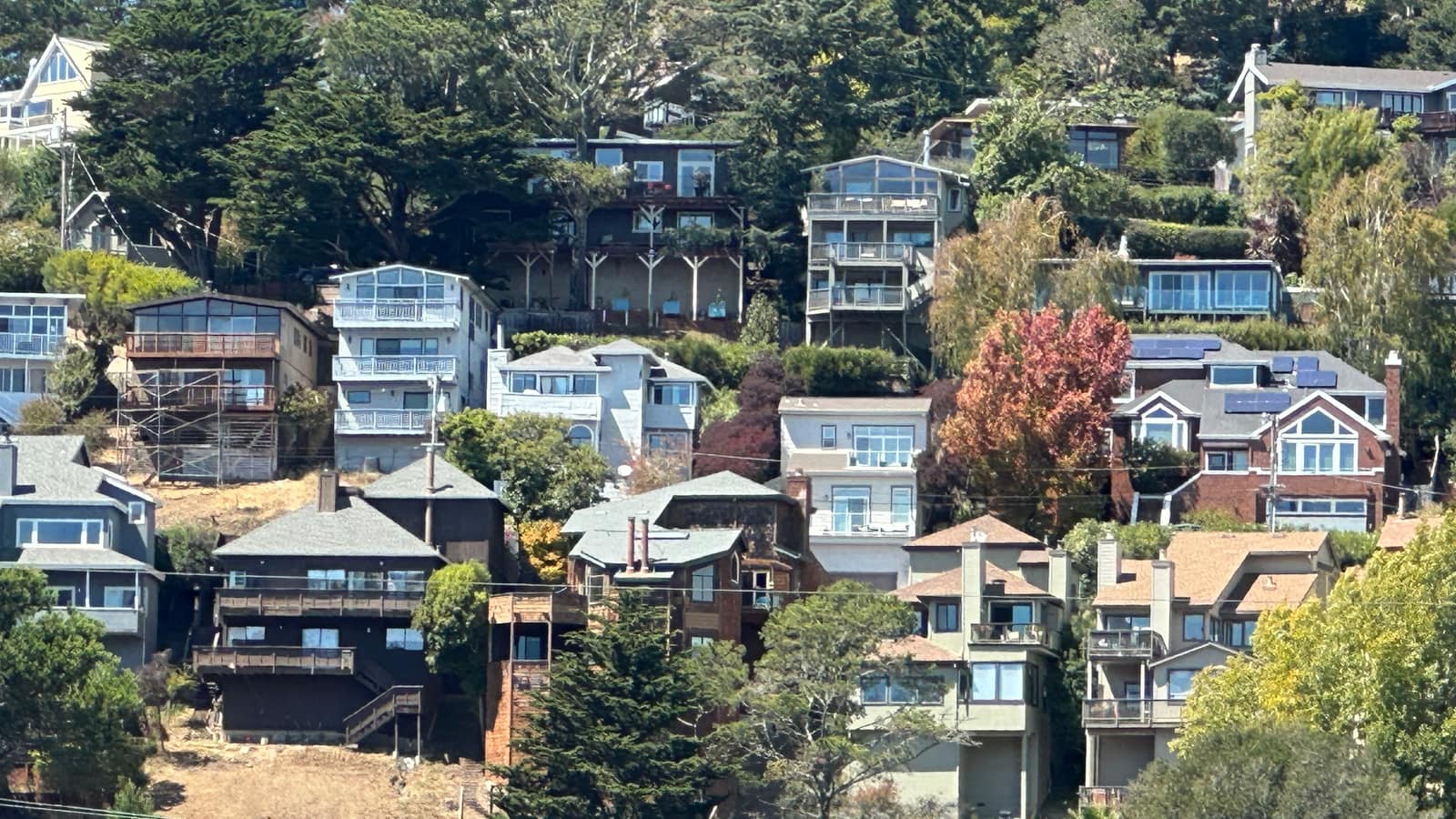
- The Bay Area functions like several different lifestyle markets: comparing Pacific Heights, Mill Valley, Lafayette, Burlingame, and Los Gatos means evaluating very different versions of daily life.
- Marin trades urban convenience for privacy, schools, and breathing room; the East Bay offers more house for the money; the Peninsula and South Bay optimize commute and campus proximity.
- Rank lifestyle priorities before ranking properties — buyers who start with square footage alone compare homes that solve different problems poorly.
- The best location in 2026 is the one that aligns with how you actually live and work, not the one with the loudest reputation.
For many high-earning Bay Area buyers, the real question in 2026 is no longer whether to buy in San Francisco. It is whether San Francisco still offers the best fit compared with Marin, the East Bay, the Peninsula, or South Bay alternatives. As mortgage rates remain around the low-6 percent range and buyers grow more deliberate about value, the conversation has shifted from broad enthusiasm for owning “somewhere in the Bay” to a more strategic comparison of lifestyle, commute, school access, space, and long-term utility.
That shift is healthy. The Bay Area is geographically compact in map terms, but it functions like several different lifestyle markets. A buyer comparing Pacific Heights, Mill Valley, Lafayette, Burlingame, and Los Gatos is not making one decision. They are evaluating very different versions of daily life.
Marin: lifestyle, privacy, and breathing room
Marin remains one of the most compelling options for buyers who prioritize privacy, natural beauty, yard space, and strong schools. For many households, especially those with flexible work schedules or only partial in-office demands, Marin offers a compelling trade: less urban convenience in exchange for more physical and psychological space.
That appeal helps keep strong Marin inventory relatively competitive. Buyers still respond quickly to turnkey homes in the right communities, but they are more selective than they were during the peak frenzy years, which means condition and pricing matter more than ever.
East Bay: value, flexibility, and family housing stock
Contra Costa and Alameda counties continue to draw buyers who want more space and a broader range of housing options without committing to the highest pricing tiers in San Francisco or the Peninsula. In 2026, the East Bay often represents one of the most practical ways to gain bedrooms, outdoor space, and family-friendly neighborhood structure while preserving some budget flexibility.
The tradeoff is that not every East Bay submarket performs the same way. Strong school districts and desirable commuter locations can stay competitive, while more price-sensitive areas may show longer days on market and more visible price adjustments. That makes local guidance especially important for buyers trying to balance value against long-term resale strength.
Peninsula and South Bay: proximity to campuses and executive convenience
For buyers tied to major employers, San Mateo and Santa Clara counties remain central. The Peninsula and South Bay offer proximity to campuses, executive networks, private schools, and neighborhoods built around convenience for demanding work schedules. In the premium tiers, these counties often share the same resilience seen in other top Bay Area markets: exceptional homes in strong locations continue to command attention, while more ordinary inventory faces a pickier buyer pool.
This region tends to work best for buyers who place a premium on commute efficiency, school access, and stable long-term demand drivers. It is often less about getting a dramatic discount and more about buying into the ecosystem that best supports career and family priorities.
How executives should think about the choice
In 2026, the smartest way to evaluate Bay Area geography is to rank lifestyle priorities before ranking properties. Buyers who start with square footage alone often end up comparing homes that solve different problems poorly. It is more useful to ask: How often will the commute happen, how important is walkability, what kind of school access is non-negotiable, and how much does private outdoor space matter?
San Francisco still excels for buyers who want density, architecture, culture, and an urban rhythm that the suburbs cannot replicate. Marin excels for lifestyle and breathing room. The East Bay can offer more house for the money and strong family utility. The Peninsula and South Bay remain highly strategic for buyers whose careers are anchored to major employment corridors.
Final takeaway
The best Bay Area location in 2026 is not the one with the loudest reputation. It is the one that best aligns with how the buyer actually lives and works. In a market where each county is moving at a slightly different speed, the most successful buyers are the ones who compare regions through the lens of lifestyle fit, negotiation leverage, and long-term flexibility rather than prestige alone.
15 Minutes. Clarity for Your Buy or Sell.
All conversations are strictly confidential • DRE #01804851
Frequently Asked Questions
Marin or the Peninsula — how should an executive choose?
Marin suits buyers prioritizing privacy, natural beauty, yard space, and strong schools, especially with flexible or hybrid work schedules. The Peninsula and South Bay work best for buyers anchored to major employment corridors who put a premium on commute efficiency, school access, and stable long-term demand drivers.
Where do families get the most practical value in 2026?
Contra Costa and Alameda counties often offer the most practical way to gain bedrooms, outdoor space, and family-friendly neighborhood structure while preserving budget flexibility — but submarkets vary, so strong school districts and commuter locations stay competitive while price-sensitive areas can sit longer.
Does San Francisco still make sense for executive buyers?
Yes — for buyers who want density, architecture, culture, and an urban rhythm the suburbs cannot replicate. The question in 2026 is fit: how often the commute happens, how much walkability matters, what school access is non-negotiable, and how much private outdoor space matters.

About the author
Adrian Huntington · San Francisco Luxury REALTOR® · DRE #01804851
Adrian Huntington has 20+ years of San Francisco real estate experience and $414M+ in closed sales, advising luxury buyers, sellers, and relocation clients with off-market access and RSU / equity-compensation strategy at Berkshire Hathaway HomeServices Drysdale Properties.
More about Adrian →