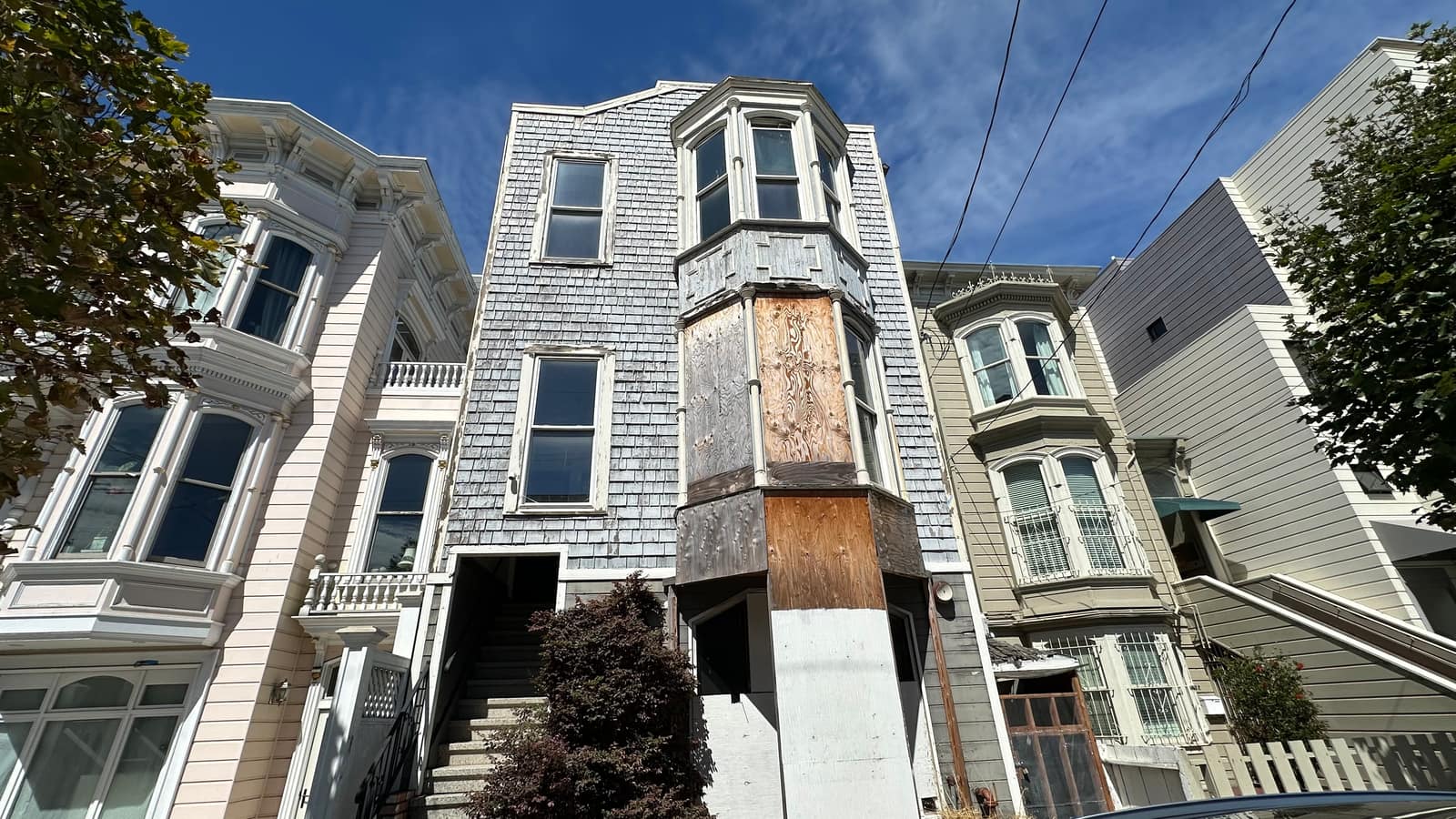
- In the Bay Area, "distressed" rarely means foreclosure — it means tired houses in strong neighborhoods, under-managed small multifamily, inherited properties, and owners worn down by deferred maintenance.
- The 2026 market rewards discipline: more expensive financing and grounded underwriting make cleanly underwritten deals more valuable.
- Deal sourcing is a system, not a search: public records, driving for dollars with follow-up, and broker/lender/contractor referral channels beat waiting for the perfect MLS listing.
- Watch four things closely: financing terms, neighborhood-level rent demand, deferred-maintenance risk, and exit optionality.
The Bay Area is not the easiest place in the country to invest in real estate, but in 2026 it may be one of the most interesting. Prices remain high by national standards, yet the market is no longer defined only by broad-based bidding wars and effortless appreciation. Investors who know where to look are finding opportunity in distressed properties, under-managed multifamily assets, and homes that can be repositioned through renovation, operational improvement, or smarter financing.
That shift matters because the 2026 market rewards discipline. Financing is more expensive than it was during the ultra-low-rate era, and underwriting standards are more grounded than they were when cheap debt papered over weak assumptions. At the same time, Bay Area housing shortages, resilient employment centers, and limited new supply continue to support long-term demand for well-located housing.
Why investors are paying attention in 2026
Several trends make the current environment more compelling than the headlines suggest. First, forecasts for the broader market point to modest appreciation rather than runaway gains, which pushes investors to focus on true deal quality rather than speculation. Second, lenders are generally demanding more robust structures and more realistic assumptions, which makes cleanly underwritten deals more valuable. Third, many owners and operators are adjusting to a world where easy refinancing and constant price expansion can no longer be taken for granted.
This creates opportunity for investors who can identify assets with a gap between current condition and future potential. In the Bay Area, that often matters more than whether a property is technically labeled “distressed.”
What distressed means in the Bay Area
In many parts of the country, distressed property suggests foreclosure or major financial distress. In the Bay Area, distressed can take several forms. It may mean a physically tired house in a strong neighborhood, a small multifamily building with below-market rents and poor management, an inherited property that needs work, or an owner who has reached the point where deferred maintenance and financial pressure make a sale attractive.
This distinction matters because some of the best opportunities never show up looking dramatic on paper. A duplex in Alameda with poor systems and weak management can be just as interesting as a visibly distressed single-family home in Contra Costa County if the upside is real and the acquisition basis is right. In a constrained region like the Bay Area, value-add often beats waiting for obvious foreclosure inventory that may never come in large numbers.
Where investors are actually sourcing deals
In 2026, investors are using a mix of traditional and direct-to-owner sourcing methods. Public records remain useful for tracking notices of default, trustee sale activity, and tax-related distress signals. Driving for dollars still works when it is paired with focused follow-up and local market knowledge, especially in neighborhoods where older housing stock creates visible deferred maintenance.
Relationships also matter. Brokers, private lenders, contractors, property managers, and attorneys often see distress or transition before it becomes public. In a market where many owners prefer quiet exits, those referral channels can be more valuable than waiting for a perfect MLS listing to appear. Investors who treat sourcing as a system rather than an occasional search tend to build stronger pipelines and see opportunities others miss.
Multifamily and value-add strategy in 2026
The Bay Area multifamily market appears to be moving into a more stable phase in 2026 rather than a speculative one. Industry commentary points to sustainable growth, moderate appreciation, and rent support tied to ongoing housing supply constraints. That does not mean every deal works. It means multifamily investors need to underwrite carefully, assume realistic rent growth, and focus on assets where renovations, better operations, or improved tenant mix can create actual value.
For many investors, the winning approach in this cycle is not a heroic prediction about cap rate compression. It is buying something operationally fixable in the right location and executing well. That could mean improving collections, reducing turnover, renovating units over time, adding legal secondary income streams, or repositioning a neglected property into a cleaner and more stable asset.
What smart investors should watch
In 2026, the best Bay Area investors are watching four things closely: financing terms, neighborhood-level rent demand, deferred maintenance risk, and exit optionality. If the debt structure is fragile, the rent story is weak, the renovation budget is too optimistic, or the exit depends on perfect future conditions, the deal is probably not as strong as it appears.
But when an investor can buy below optimized value, improve operations, and hold quality housing in a supply-constrained region, the long-term case still holds. The Bay Area is expensive, but it is also one of the most structurally undersupplied housing markets in the country, and that matters over time.
Final takeaway
Bay Area investing in 2026 is not about waiting for a crash or chasing hype. It is about finding mismanaged, under-improved, or situationally motivated opportunities and applying discipline to acquisition, underwriting, and execution. The market is harder than it looks from the outside, but for serious investors it is also more nuanced and more workable than the headlines suggest.
15 Minutes. Clarity for Your Buy or Sell.
All conversations are strictly confidential • DRE #01804851
Frequently Asked Questions
What does "distressed" actually mean in the Bay Area?
It can be a physically tired house in a strong neighborhood, a small multifamily building with below-market rents and poor management, an inherited property that needs work, or an owner for whom deferred maintenance and financial pressure make a sale attractive. Some of the best opportunities never look dramatic on paper.
How are investors sourcing Bay Area deals in 2026?
A mix of public records (notices of default, trustee sale activity, tax-related distress signals), driving for dollars paired with focused follow-up, and referral relationships with brokers, private lenders, contractors, property managers, and attorneys who see distress before it becomes public.
Is Bay Area multifamily still worth underwriting in 2026?
Industry commentary points to a more stable phase — sustainable growth, moderate appreciation, and rent support from ongoing supply constraints. The winning approach is buying something operationally fixable in the right location and executing well, not betting on cap-rate compression.

About the author
Adrian Huntington · San Francisco Luxury REALTOR® · DRE #01804851
Adrian Huntington has 20+ years of San Francisco real estate experience and $414M+ in closed sales, advising luxury buyers, sellers, and relocation clients with off-market access and RSU / equity-compensation strategy at Berkshire Hathaway HomeServices Drysdale Properties.
More about Adrian →